Looking at: IPO Hype
Estimated reading time: 5 minutes
IP-Whoa
Going public is in — at least for technology companies. Between the upcoming SpaceX IPO on June 12, Anthropic confidentially filing to go public, and the expectation that OpenAI will make its own filing any day now, IPOs have been all the rage in headlines.
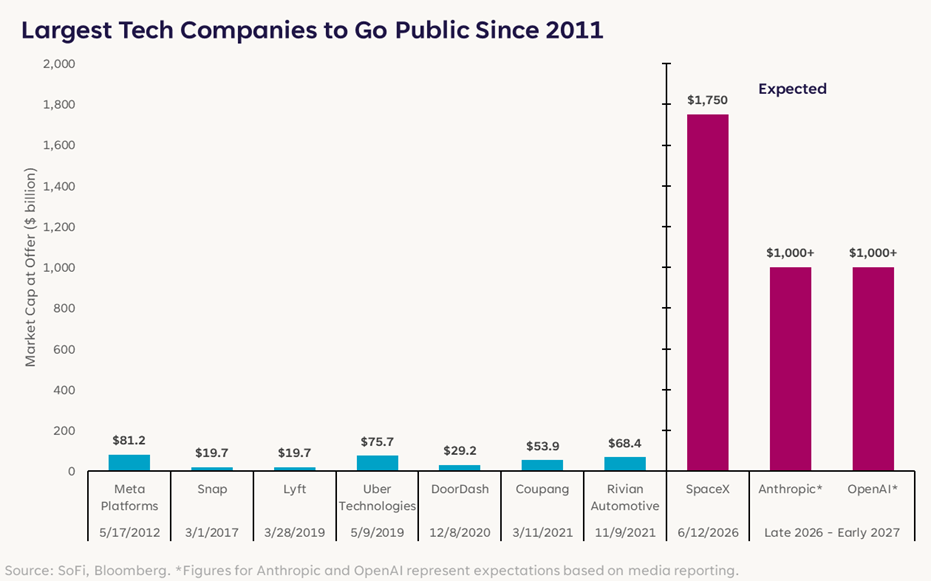
Not only are these three companies front-and-center in the current technology revolution, but they’re expected to go public at record-breaking valuations: SpaceX’s target valuation is $1.75 trillion, Anthropic’s most recent valuation was $965 billion (as of May), and OpenAI’s most recent valuation was $852 billion (as of March). If the latter two go public later this year as planned, it’s reasonable to expect both to do so at a target valuation over $1 trillion.
Those numbers are bonkers. When we compare SpaceX, Anthropic, and OpenAI to the largest IPOs of the past 15 years, they eclipse anything we’ve seen before.
The excitement is palpable. One could argue the valuations are reflective of just how different this environment is as we experience one of the biggest technology revolutions in history. Investors are drooling over the opportunities in AI and the space economy, and it’s hard to see that drying up anytime soon.
That said, there are some concerns over where the capital to fund these IPOs is going to come from. Will investors need to sell some of their existing AI exposure to buy shares of the newly public companies? To some extent, yes, particularly for investors trying to manage concentration in certain industries and themes.
But is that risk big enough to threaten AI as the return driver of broad indices?
Be Prepared: Pattern Recognition
The IPO landscape has changed in the past 15 years, most notably the size of the companies going public. Gone are the days when most companies go public as small-caps and investors buy on the hopes of them growing into large-caps over time.
But one of the things that hasn’t changed is the volatility that newly public companies can (and most often do) experience in the first year of trading.
The volatility is driven mainly by the market going through a period of price discovery as it gets acquainted with the company. Newly public companies see meaningful stock price swings based on a few big factors: Quarterly earnings reports that investors use to recalibrate expectations, the expiration of lockup periods (when insiders are able to start selling shares), and oftentimes, macro economic or broad market forces that affect risk appetite.
To put it simply, investors participating in IPOs should be prepared for a heightened level of volatility in the stock during at least the first 12 months of trading. Here is an illustration of previous IPOs and the range of outcomes in the first year:
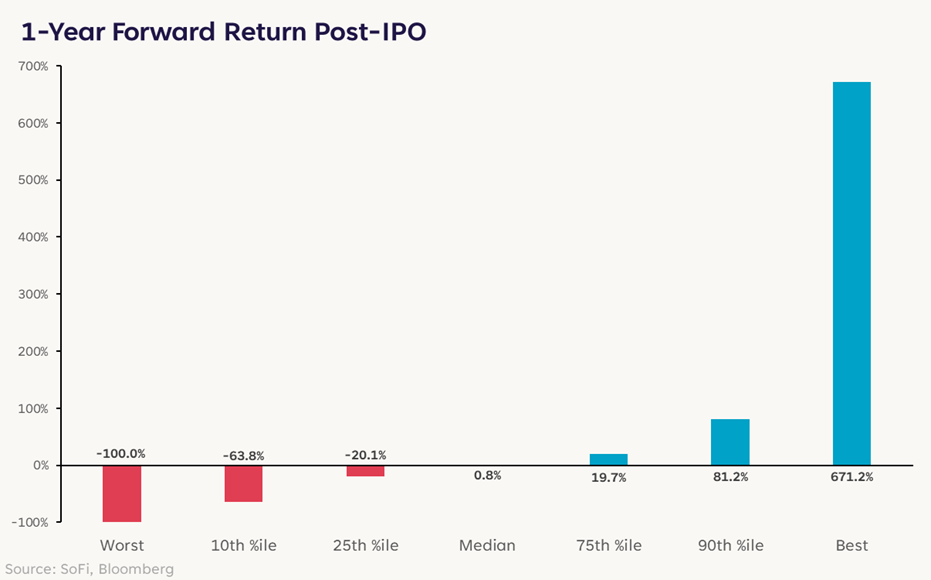
As a company becomes more seasoned in the market, volatility should lessen, but it can take time. And returns can vary widely.
Enough Money to Go Around?
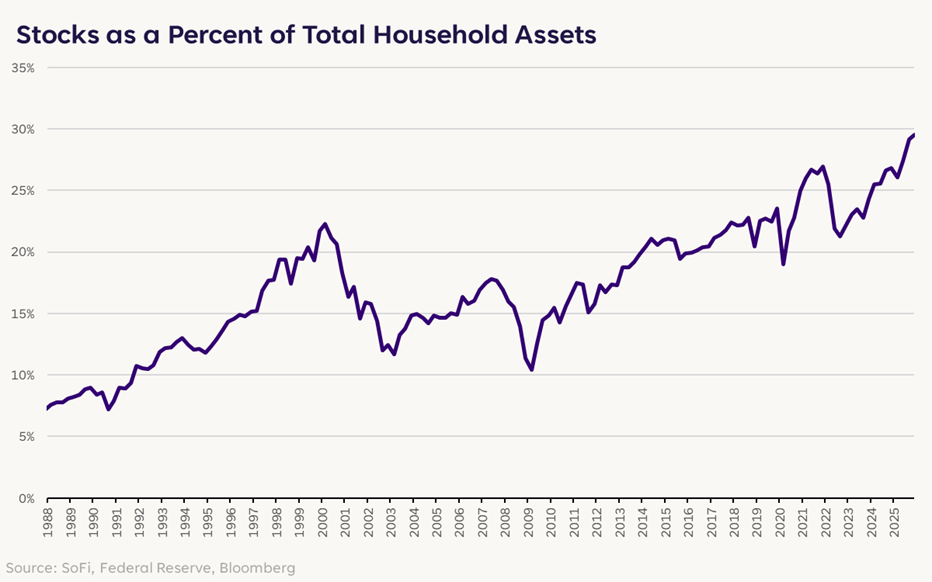
Back to the question of where investors will source the funds to buy these upcoming IPOs. It doesn’t require a huge leap of logic to assume that at least some of the money will come from investors’ existing AI holdings. Of course, we can’t predict that exactly, and the source of funds is likely to vary widely between individual and institutional investors. It’s also logical to suggest that there’s still plenty of capital to go around: Household exposure to equities is at a record high, and broad market indices have seen very strong returns for the past three and a half years. Stocks are up, and liquidity is ample.
These large IPOs are newsworthy and deserve the attention they’re getting. It’s yet to be seen if they will serve as an indicator of continued insatiable demand for AI and innovative technology investments, or if they’ll be met with more tepid enthusiasm. My bet is on the former.
Disclaimer
SoFi Securities (Hong Kong) Limited and its affiliates (SoFi HK) may post or share information and materials from time to time. They should not be regarded as an offer, solicitation, invitation, advice, recommendation to buy, sell or otherwise deal with any investment instrument or product in any jurisdictions. Keep in mind that investing involves risk, and past performance of an asset never guarantees future results or returns. It’s important for investors to consider their specific financial needs, goals, and risk profile before making an investment decision.
SoFi HK does not make any warranties about the completeness, reliability and accuracy of this information and will not be liable for any losses and/or damages in connection with the use of this information.
The information and materials may contain hyperlinks to other websites, we are not responsible for the content of any linked sites. The information and analysis provided through hyperlinks to third party websites, while believed to be accurate, cannot be guaranteed by SoFi HK. These links are provided for informational purposes and should not be viewed as an endorsement. The risk involved in using such hyperlinks shall be borne by the visitor and subject to any Terms of Use applicable to such access and use.
Any product, logos, brands, and other trademarks or images featured are the property of their respective trademark holders. These trademark holders are not affiliated with SoFi HK or its Affiliates. These trademark holders do not sponsor or endorse SoFi HK or any of its articles.
Without prior written approval of SoFi HK, the information/materials shall not be amended, duplicated, photocopied, transmitted, circulated, distributed or published in any manner, or be used for commercial or public purposes.


About SoFi Hong Kong
SoFi – Invest. Simple.
SoFi Hong Kong is the All-in-One Super App with stock trading, robo advisor and social features. Trade over 15,000 US and Hong Kong stocks in our SoFi App now.